

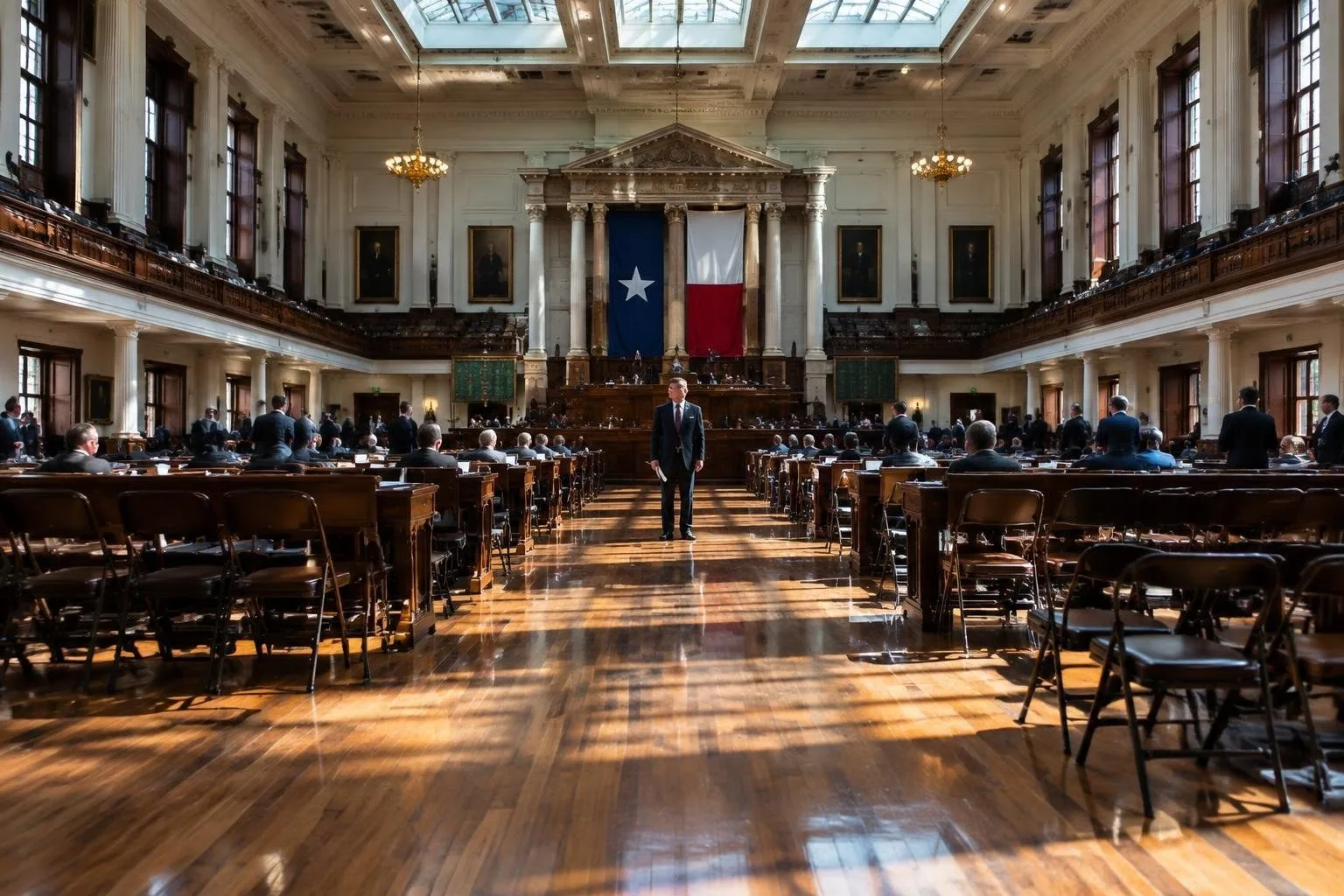
Gov.-elect Gina Hinojosa opened her first press briefing with the words, “Now the fun part starts.” She added, “We have for months been meeting with experts, planning, and making sure that we were prepared to govern.” Less than two weeks after Texas voters handed Democrats the governor’s office, the lieutenant governor’s office and a House majority unseen in more than twenty years, the new leadership is moving from campaign celebration to policy drafting.
State Rep. Trey Martinez Fischer described the moment as “I’m like a kid in the candy store,” noting that the theoretical questions of power are now concrete. On Monday, Nov. 9, Democrats filed their first wave of bills ahead of the regular session slated to begin on Jan. 12. The package includes a push to raise the minimum wage to $17 an hour (House Bill 246), parallel proposals to set a $15 floor, two Medicaid-expansion measures, and a repeal of the state’s private-school voucher program approved in 2025.
Ambitious proposals target cost of living and health care
Governor-elect Gina Hinojosa emphasized that her agenda is about “putting money in the pocket of Texans,” linking higher wages to broader economic security. Rep. Martinez Fischer echoed that sentiment, pointing to rising insurance costs and stagnant wages as drivers for the $17 minimum-wage bill. Meanwhile, Lt. Gov.-elect Vikki Goodwin framed health care as a major “cost driver” and supports expanding Medicaid, an initiative that could cover roughly 1.1 million Texans according to Rep. John Bucy III. Bucy filed two separate bills, each offering a different pathway to broaden coverage for low-income adults who cannot afford private insurance.
Education funding also features prominently. House Bill 376, authored by Bucy, would shift public-school financing from average daily attendance to enrollment counts, reducing the impact of student absenteeism on district budgets. A second bill seeks to overturn the Education Savings Account program that channels public dollars to private-school expenses, a program Republicans fought to enact in 2025. These moves signal a clear intent to reshape both public-school resources and the broader school-choice landscape.
Republican Senate retains decisive control
The Texas senate, however, remains under Republican control with a 19–12 majority, giving its members the votes needed to stall many of the Democratic initiatives. Republican strategist Matt Mackowiak warned that “those things are largely going to be almost impossible with the Republican Senate,” though he expected some bipartisan measures to pass. He argued that the Senate would likely defend the school-choice program, noting the decade-long effort it took Republicans to secure it.
Another Republican strategist, Brendan Steinhauser, predicted limited openings, suggesting that while major reforms on the gun and abortion fronts are unlikely, cooperation could arise on public-school funding increases and the legalization of recreational marijuana. Both strategists identified data-center regulation and tax breaks as potential bargaining chips, hinting at a narrow set of issues where cross-aisle negotiation might be feasible.
Power beyond the floor: vetoes, appointments and speaker influence
Even without a Senate majority, Democrats possess several strategic levers. The newly elected House will elect a speaker who controls committee assignments and the flow of legislation. Governor-elect Hinojosa can veto individual bills and line-item budget items, a move Republicans cannot overturn without a two-thirds supermajority in both chambers. She also gains authority to appoint leaders to state boards and agencies, with many appointments subject to Senate confirmation, and can temporarily fill vacancies while the Senate is out of session.
One high-profile appointment will be the successor to Education Commissioner Mike Morath, an appointee of former Governor Abbott whom Hinojosa has pledged to replace with a former classroom teacher. Rep. John Bucy III emphasized that the new commissioner should understand the education space firsthand. While Senate Republicans may challenge that specific choice, they are expected to hold firm on preserving the school-choice program, using their procedural advantages to shape the final legislative outcome.