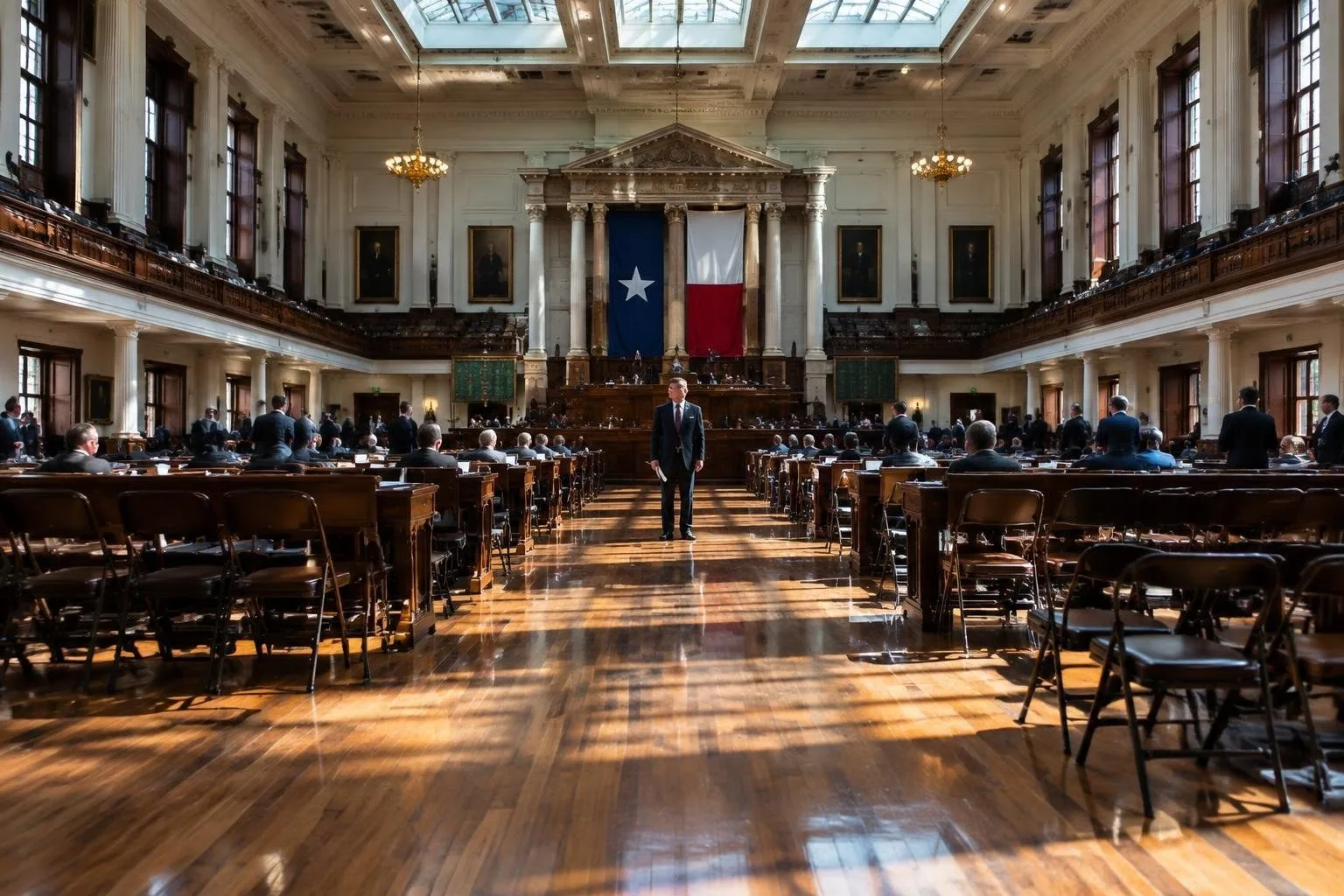

During the 2023 legislative session, the Texas Legislature passed a package that carved out a dedicated business court system to handle complex, high-value disputes. The idea was to move such cases away from locally elected judges—many of whom sit in major Democratic-leaning cities—into a statewide venue staffed by gubernatorial appointees. At the same time, lawmakers created a new statewide appellate body, the 15th Court of Appeals, granting it immediate jurisdiction over cases involving state officials.
Five divisions of the business court now operate across the state, with one located in San Antonio’s Bexar County. Judges Marialyn Barnard and Stacy Sharp set up a double-height courtroom on North St. Mary’s Street earlier this year. Barnard told reporters that the docket has “skyrocketed” as Texas attracts corporations eager to reincorporate, citing matters tied to Valero, NuStar Energy, and the Kampmann family’s automotive holdings. She emphasized that the surge reflects a broader trend: Houston and Dallas are experiencing a boom, and overflow is spilling into Austin, San Antonio, and Fort Worth.
Political turnover puts the courts in Democratic hands
Last week’s election produced a pronounced “blue wave,” delivering Democratic victories across statewide offices, including the governorship. Incoming Governor Gina Hinojosa, who campaigned on reclaiming power from big business, now holds the authority to nominate judges for the business courts. Her opponent, former Governor Abbott, had originally appointed Barnard and Sharp to two-year terms in September, and the pair will serve until the end of the 90th Legislative Session unless the Senate confirms them.
The Texas Senate must muster a two-thirds majority to lock in these judges for an additional two years. Republicans currently lack enough votes, leaving a narrow window before the legislative session closes in May. Should the Senate fail to act, the appointments could linger until the session ends, after which Governor Hinojosa could either confirm new judges or let the courts sunset, reverting cases to traditional district courts.
Key players and the stakes of a shifting judiciary
Democratic attorney general Ryan Patrick of Texans for Lawsuit Reform highlighted the tension: “My concern would be that the court lurches to the left and becomes very ideological … looking more like the Delaware Chancery Court that we were trying to get away from — and is the reason companies are coming to Texas.” The Delaware Chancery Court is often cited as a model for corporate dispute resolution, and many businesses chose Texas to avoid its perceived rigidity.
Elon Musk, a major donor to the business-court initiative, has poured “hundreds of millions of dollars” into the effort, according to Democratic County Commissioner Andy Sommerman. Musk’s past clash with the Delaware court over Tesla compensation and his recent push to relocate SpaceX operations—potentially acquiring Boca Chica State Park—underscore his vested interest in a Texas-friendly legal environment.
Sommerman added a wry observation about the election’s surprise factor: “They would have never done it if they had had a crystal ball and seen this election.” The comment reflects how the GOP’s gamble on a business-court infrastructure now faces an unexpected political reality.
What the future may hold for the business courts
Governor Hinojosa voted against the court’s creation while serving in the House, yet she has not publicly outlined a concrete plan for the institutions she now oversees. Some Democrats have already signaled a desire to dismantle the courts, arguing they tilt the playing field toward corporate interests. Others, like Hinojosa, may simply re-staff the benches with judges aligned to her administration’s priorities.
Given the Senate’s need for a two-thirds vote, the next few months will be critical. If the legislature confirms the current appointees, the business courts could operate for at least two more years under a mixed-party environment. Conversely, a failure to confirm could allow the new governor to reshape the judiciary entirely, either by appointing fresh judges or by eliminating the courts and returning cases to elected district judges.
Regardless of the outcome, the intersection of high-stakes corporate litigation, partisan politics, and billionaire influence ensures that Texas’s legal landscape will remain a focal point for business leaders and policymakers alike.